
10 Steps To Lose Fat For Summer
- Feb 24, 2021
- 6 min read
Updated: Jun 13, 2024

As I write this, it’s the middle of February. We’re about 3-4 months away from better weather in England and the time of year when people wish they’d started working to lose fat for summer sooner. (Because we all know it takes time to get in shape, but not all of us give it time). So I’ve had the idea of writing you out a clear 10 step process for getting in great shape for the summer. I love a list because I don’t know about you, but if I’m given a list of things to do and tick off which I know are going to work, I feel pretty unstoppable pretty quickly. Let’s get to it and start you off with number one. Step 1) Know where you’re at and where you’re going You absolutely cannot start a successful journey without a destination in mind. You’ll just be meandering aimlessly between the fridge and the sofa most likely. It's human nature. You need to know where you are starting (body composition, routines, habits, strength, fitness etc), and where you want to get to by the summer (leaner, disciplined, skilled, stronger, fitter etc). But you need to be specific. There is no point saying you want to go to America when you actually want to go to the Top of the Rock and look over New York City at night, but your flight landed in Texas and... well Texas ain't so great right now... What does being in great shape mean to you? What’s going to give you the most confidence? What’s going to help you be the best version of you? Do you want to look good in swimwear, or do you want to be fit enough to take on some outdoor activities? Do you want both? Figure out some important measurable variables, and write them down, making sure they’re realistic. Step 2) Keep a food diary for 1-2 weeks At this point I’m assuming goals slightly, but for most health and fitness goals nutrition IS going to play a big part, and I’m going to give you what I think is the easiest route to improved nutrition. It starts with keeping a food diary for a week or two. By this, I mean keeping a record of what you eat each day. It doesn’t have to be an actual diary. It doesn’t need to include exact weights and portions of foods (unless that works for you). It doesn’t need to be done in any particular way. You just need to be aware of what you are eating so that you can assess where you need to improve. If you struggle with this concept, just take a photo of your meals and snacks and keep it super simple. Step 3) Figure out 3-5 EASY areas for improvement Because we’re trying to make this as easy as possible, I want you to just take a morning to look back over your food diary, and identify 3-5 easy areas for improvement. I say 3-5 as the reality is the fewer areas you identify, the easier it will be to commit and stick to them (more on that in a minute). Also, the easy bit is really important. You’re at the start of this process and are likely to have little to no momentum. Get some momentum with easy wins FIRST. The second really key part is to improve areas that appear frequently, not the one offs. Say from your food diary you spot that you had a burger and chips on the 4th day, and 2 super high calorie snacks every day. You decide that you should never eat burgers again but don’t action the high calorie snacks. You’ve missed the point. Make those snacks lower calorie in the easiest way possible and forget the burger for now. (If you’re having burgers every day however…. Just don’t). Step 4) Commit to the changes Once you’ve identified 3-5 easy areas to improve on your nutrition commit to making those changes. Don’t be wishy washy with this. It’s only 3-5 things, and we’ve already identified them as few and easy… so just do it. Not for me. Not for anyone else. Commit to it for yourself. Because you’re the one reading this wanting to be in great shape for the summer. Step 5) Hire a coach This could be step one, and if it was it would be a pretty short one item list, so instead it's point 5. If you want to guarantee success, hiring a coach to be accountable to and to make the process easier is invaluable. If you want me to do that for you, I absolutely can do that HERE. At the very least, get yourself a good training program to follow (I can also write you one here). If you skip this step, it’s going to make steps 6, 7, 8, 9 and 10 harder for you to do successfully. Probably steps 1, 2, 3 and 4 too. If you were truly skilled in getting in shape for summer, you wouldn’t be reading this. Hiring professional help for anything you really want to achieve is a must. Step 6) Train predominantly strength 3-4 times a week Once you have a coach or training program, what you should be looking at is a 3-4 day a week strength program with a scattering of conditioning to start off with. A three day a-week full body as a minimum, or a 4 day upper/lower split or push/pull/legs being more optimal in my opinion. There should be a heavy focus on big bang for buck exercises like squats, deadlifts, presses, rows and pull-ups, well-chosen accessories and some short and engaging conditioning work. You should be hitting the main muscle groups twice a week minimum, and enjoying each session. If this training is going to be impacted by gyms being close, then hiring a coach is even more important, as their skillset in working around things like limited kit will be invaluable. Step 7) Keep a training diary If you hired a coach in step 5, they’ll likely have a great system for this. If not you’ll need to make one yourself. Record your workouts to keep a track of your consistency, your weights, your sets and reps and how each session went/felt. Anyone who has been successful in anything has kept a good eye on the key performance indicators for their area of success. Yours are going to be your training and nutrition diary. Step 8) Use progressive overload With that training diary you need to make sure that you use progressive overload and actually get stronger. By progressive overload I mean the process of lifting slightly more over time. More could be more weight, more volume or density, but load will likely be king or queen here. This is because getting stronger, especially for someone not already in shape is the best guarantee of getting bigger and stronger over time. You can try and measure your pump and make sure it gets sicker every session, but it isn’t going to quantify well. Progressive overload is easy to plan, execute, record and see in process. Other training variable aren’t. More strength will also likely mean more muscle, more calories burned at rest, and more visible results when bodyfat is reduced. Step 9) Regularly check in on progress Again, if you hired a coach in step 5, they’ll have a great process for doing this and making sure you stay on track and don’t waste time spinning your wheels. If you didn’t, you’re going to need to understand the key progress markers, and keep an eye on them regularly. For the hugely generic goal of “getting in shape” it could be anything from, or a combination of things from the list below:
Weight
Waist measure
Bodyfat %
BMI
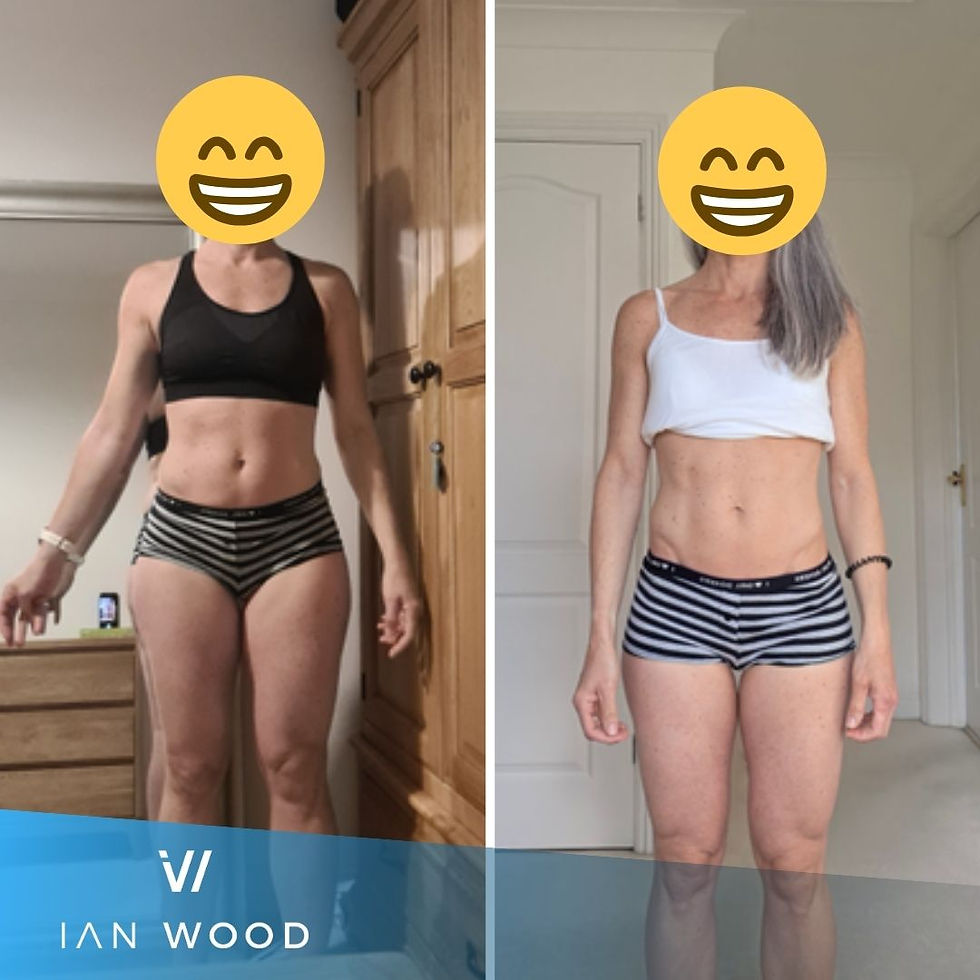
Progress photos
Your training diary
Your food diary
Your lifting technique
You can check all of the above barring the bodyfat % on your own within 15 minutes once a week if you want to. I know this as I’ve checked in upwards of 75 peoples stats on a Monday morning who’ve all managed it. The more information the better if you want guarantees on your results. Step 10) If progress stops for 2 consecutive weeks, go back to step one to reset. Then finally, there is no point in tracking the above data if you don’t do anything with it. If it’s working and you’re progressing, boom, you just got yourself some new motivation because you saw your effort paying off and you’ll want more of it (this is the single biggest source of motivation in life). If it’s not working, it may be a blip. It happens. Don’t panic. If it doesn’t work for two weeks in a row… it’s likely you need to change something slightly to keep yourself moving. Once again, if you hired a good coach in step 5 they will do all of this for you and make you’re like even easier. They’ll probably give you a 2-3 step process like this for getting back on track, just even simpler. If you haven’t got a coach, go back to step one and repeat this whole process. This will genuinely work, and is the basis for all body composition change, simplified into the “what you need to know” and nothing more. It can be more complex behind the scene depending on programming and systems, but at face value this is what it is all about. All that’s left for you to do is go out there and do it. You’ve got your 10 steps, start working on step one today. See you on the beach. Ian.


Comments